Beyond Fingerprints: Why Palm-Vein and Multi-Modal Systems Matter for High-Security Facilities
A standard office doesn’t need the same authentication rigor as a data center holding sensitive infrastructure. Aditya Systems, serving Mumbai since 2005, draws this distinction explicitly in how it approaches biometric technology.
A Problem Tolerated for Far Too Long
Manual attendance registers, swipe cards, and buddy punching — Indian workplaces have tolerated these inefficiencies for far too long. The result? Payroll inaccuracy, lost productivity, and zero accountability.
Why “Zero Accountability” Is the Real Cost
Payroll inaccuracy and lost productivity are visible, measurable costs. “Zero accountability” is the quieter, harder-to-quantify cost — a system where nobody can be genuinely certain who was actually present, at what time. This is exactly the gap biometric authentication closes at a fundamental level, regardless of which specific modality is used.
The Real Technology Tiers
FingerprintStandard, widely deployed modality suited to typical office and factory attendance needs.
Face RecognitionLive image recognition and verification, addressing contactless authentication needs.
Palm-Vein & Multi-ModalThe premium tier — combining two or more biometric inputs for maximum accuracy.
Why Palm-Vein and Multi-Modal Systems Sit at the Premium End
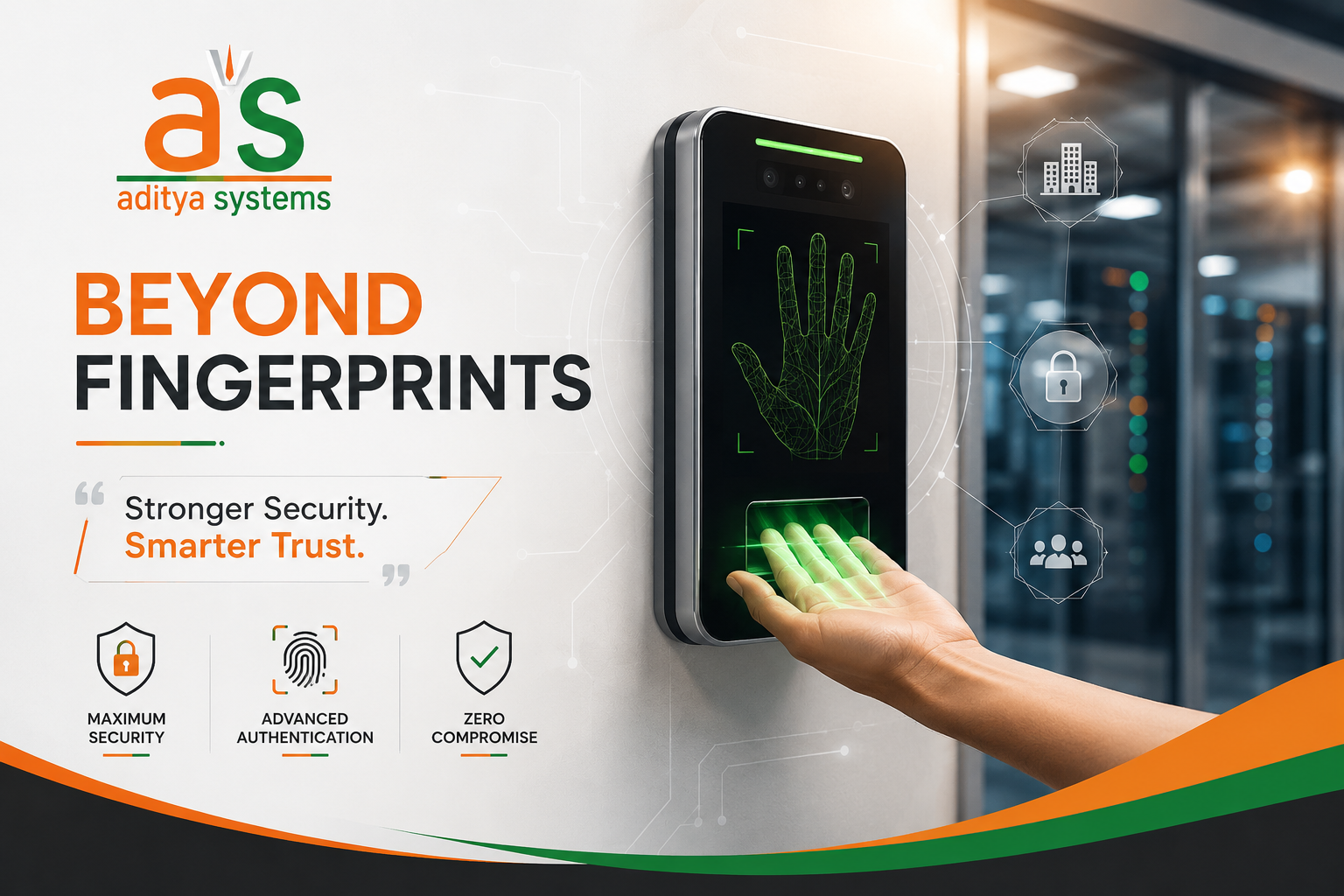
Palm-vein and multi-modal systems sit at the premium end, combining two or more biometric inputs for maximum accuracy. They are commonly deployed in high-security facilities such as data centers, R&D labs, and government buildings.
Why Data Centers, R&D Labs, and Government Buildings Specifically
| Facility Type | Why Standard Authentication Isn’t Enough |
|---|---|
| Data Centers | Physical access can expose critical infrastructure and sensitive stored data. |
| R&D Labs | Proprietary research and intellectual property justify genuinely elevated access control. |
| Government Buildings | National or institutional security stakes demand the highest available verification confidence. |
In each of these environments, the cost of a single unauthorized access event is genuinely higher than in a typical office — justifying the additional investment in combining multiple biometric inputs rather than relying on a single verification method alone.
Why “Combining Two or More Inputs” Genuinely Increases Accuracy
A single biometric modality, however reliable, still carries some genuine margin for error or circumvention. Requiring a second, independent input — such as pairing palm-vein scanning with another modality — means a false match would need to occur across multiple independent systems simultaneously, a genuinely much higher bar than defeating a single verification layer.
Why This Isn’t the Right Choice for Every Environment
The right choice depends on your workforce size, environment, security level, and budget — which is why a pre-installation site survey is essential.
Premium multi-modal systems genuinely aren’t necessary for every deployment — a standard office with typical attendance needs is well served by fingerprint or face recognition alone. Recommending palm-vein and multi-modal systems specifically for high-security contexts, rather than universally, reflects genuine attention to matching technology investment to actual risk level.
The Real Installation Process Still Applies
Professional biometric installation follows a structured sequence. It begins with a free site survey where a technician evaluates your premises — entry points, network infrastructure, lighting conditions, and power availability — then delivers an itemized quotation covering hardware, cabling, software licenses, and labor. This same structured process applies whether the deployment is a standard fingerprint unit or a premium multi-modal system.
Why Legal Compliance Matters Even More at This Tier
From choosing the right biometric modality to complying with India’s Digital Personal Data Protection Act, every step matters. Palm-vein and multi-modal systems capture genuinely more sensitive biometric data than a single fingerprint scan — making DPDP Act compliance an even more critical consideration for facilities deploying this premium tier of technology.
A Practical Checklist for Choosing Your Security Tier
- Honestly assess your facility’s actual risk level. Standard offices and high-security facilities like data centers genuinely warrant different technology tiers.
- Consider whether a single point of failure is acceptable. Multi-modal systems specifically address this by requiring independent verification layers.
- Weigh premium technology cost against genuine security stakes. The investment is justified specifically where unauthorized access carries real, significant consequences.
- Request a site survey regardless of tier. The same structured installation process applies across all technology levels.
- Confirm DPDP Act compliance explicitly. This matters even more with the more sensitive data multi-modal systems capture.
Match Your Security Technology to Your Actual Risk Level
From standard fingerprint attendance to premium palm-vein multi-modal systems for high-security facilities — get a free site survey from Aditya Systems, Mumbai.Call 7875588899 →
Frequently Asked Questions
What is a multi-modal biometric system?
A system combining two or more biometric inputs, such as palm-vein and another modality, for maximum verification accuracy.
Where are palm-vein and multi-modal systems typically deployed?
High-security facilities such as data centers, R&D labs, and government buildings.
Do all facilities need this premium tier of technology?
No — the right choice depends on workforce size, environment, security level, and budget, which is why a pre-installation site survey is recommended.
Does installation differ for premium systems?
The same structured process applies — free site survey, itemized quotation, and DPDP Act compliance — regardless of which technology tier is chosen.
Final Thoughts
Manual registers, swipe cards, and buddy punching have genuinely been tolerated for far too long — but the solution isn’t identical for every environment. A standard office is well served by fingerprint or face recognition; a data center, R&D lab, or government building genuinely warrants the additional accuracy multi-modal, palm-vein systems provide.
With a structured site survey process and attention to DPDP Act compliance across every technology tier, Aditya Systems helps Mumbai facilities match their actual security investment to their genuine risk level, not a one-size-fits-all default.
Note: This article reflects the products and information published by Aditya Systems on adityasystems.net at the time of writing. Device availability and pricing may vary; please contact Aditya Systems directly for a current site survey and quote.
© 2026 Aditya Systems • adityasystems.net • Andheri, Mumbai • +91-7875588899 • support@adityasystems.net